






It is becoming more critical for students to understand what sustainability means and apply this knowledge at the workplace. This is exactly what Future17 SDG Challenge brings into curricular: SDG literacy and skills, universal for any industry.
Future17 is a consortia set up by QS and the University of Exeter that includes such universities as: CUHK, University of Sao Paulo, Stellenbosch University, the University of Auckland, Arizona State University, UCL, and others.
Future17 students are first introduced with some training before the programme begins. This induction ensures that the students use the same vocabulary throughout the eight-week course. There is a wide range of topics covered, including project management, design thinking, and intercultural communication.
We sat down with a Future17 alumnus to talk about their journey so far and how the programme has helped them to grow their knowledge and skills.
Please introduce yourself, your background and why you applied for Future17.
I'm Brett, I just turned 20 in July and I am a second year Politics and Sociology student at University of Exeter. I applied to Future17 because I heard about it through my politics newsletter and it sounded really interesting to help companies around the world with sustainable development goals and helping improve their sustainability – it's a big draw for me.
Exeter is one of the founding members of Future17 so I would imagine within the university, there is a lot of buzz about the programme.
When you applied, how did the process work?
I filled out a few questions about why I was interested and I got talking with a few friends and a few people that had been involved in a study the first year before and it just all sounded really interesting – Myself and a few friends just talked about applying for it so when we got it, we were super happy.
Can you tell us more about the project you've been assigned to?
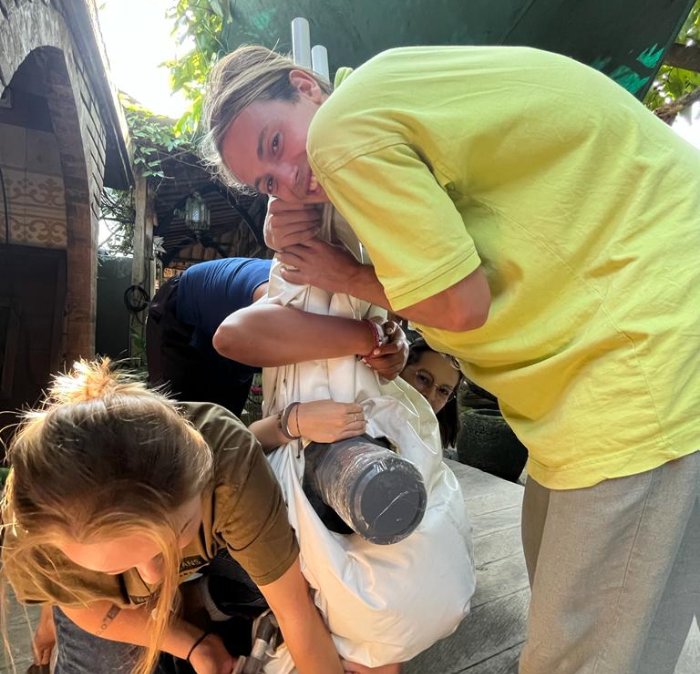
I got paired with an Indonesian company called Su-re.co. They work as a think-to-be-tank and are a business that sells very sustainable products that are locally sourced and help the livelihoods of farmers in Bali. They also run a lot of events, helping students and going into the fields to help farmers with climate field schools to teach them about how to use biogas produced by the company. So there's a lot going on from business to engineering, to research and think-tank work.
Can you elaborate a little bit about which project you were a part of?
I was part of one of the groups that was working on business-to-business partnerships – I was working primarily on the business side of things, helping them to find potential partners, both locally in Indonesia and abroad. We also helped with things to do with eco-labeling and everything to do with the process from product to consumer.



Get closer to your dream programme
Your consent preferences have been set.
Time to start exploring.
Your account has been removed.
You can still browse the site or sign up again once you have parental consent.
Get closer to your dream programme